
The complete guide
Sorting the small things that make a room untidy
Small things, big mess
Look at a room that feels cluttered and count the large objects causing it. There usually are not any.
What makes a room untidy is volume of small items with no assigned place: chargers, batteries, pens that may or may not work, tape, glue, hair grips, spare buttons, the little bag of screws from the last flat pack.
They accumulate on surfaces because putting them away means opening a drawer that is already full of other small things, and finding room. So they stay out.
Why twelve small drawers beats one big one
The fix is not more space. It is more categories.
One big drawer holds everything and helps with nothing, because finding the tape still means moving the glue, the batteries and three chargers. Within a month it is a bin with a handle.
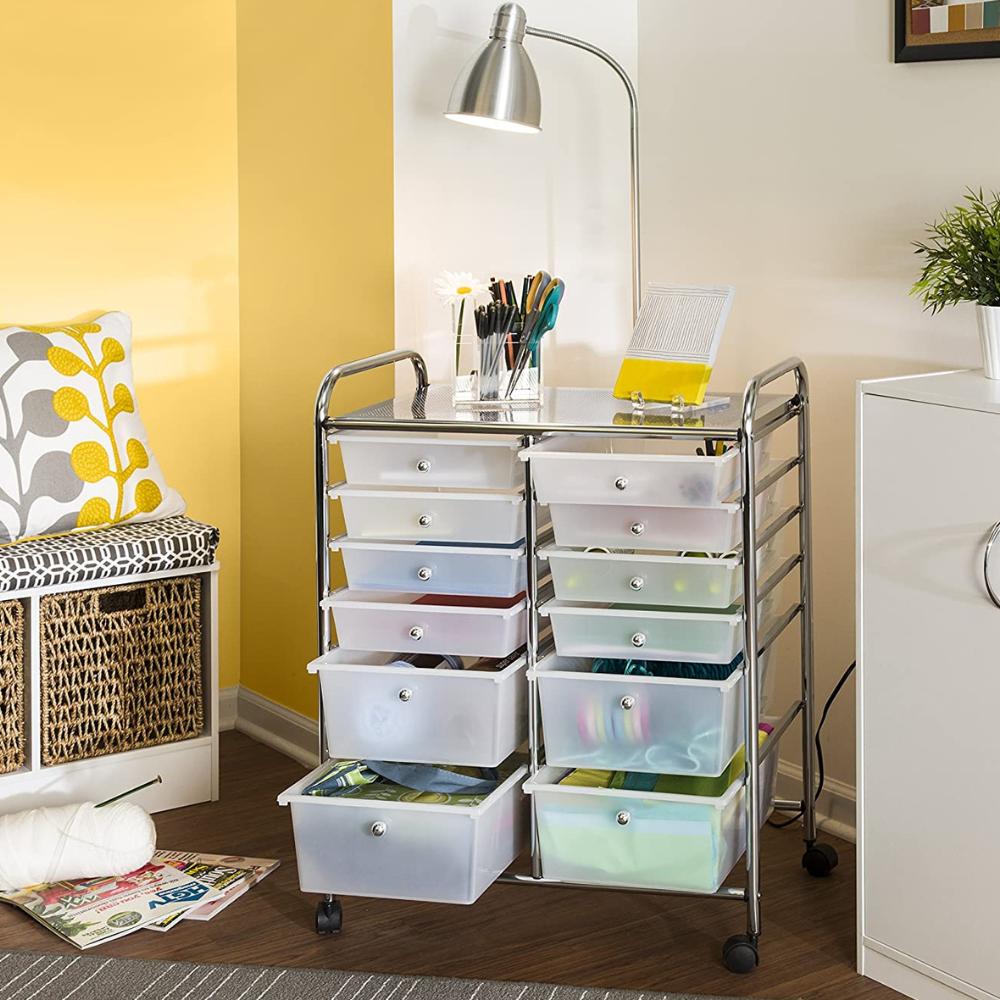
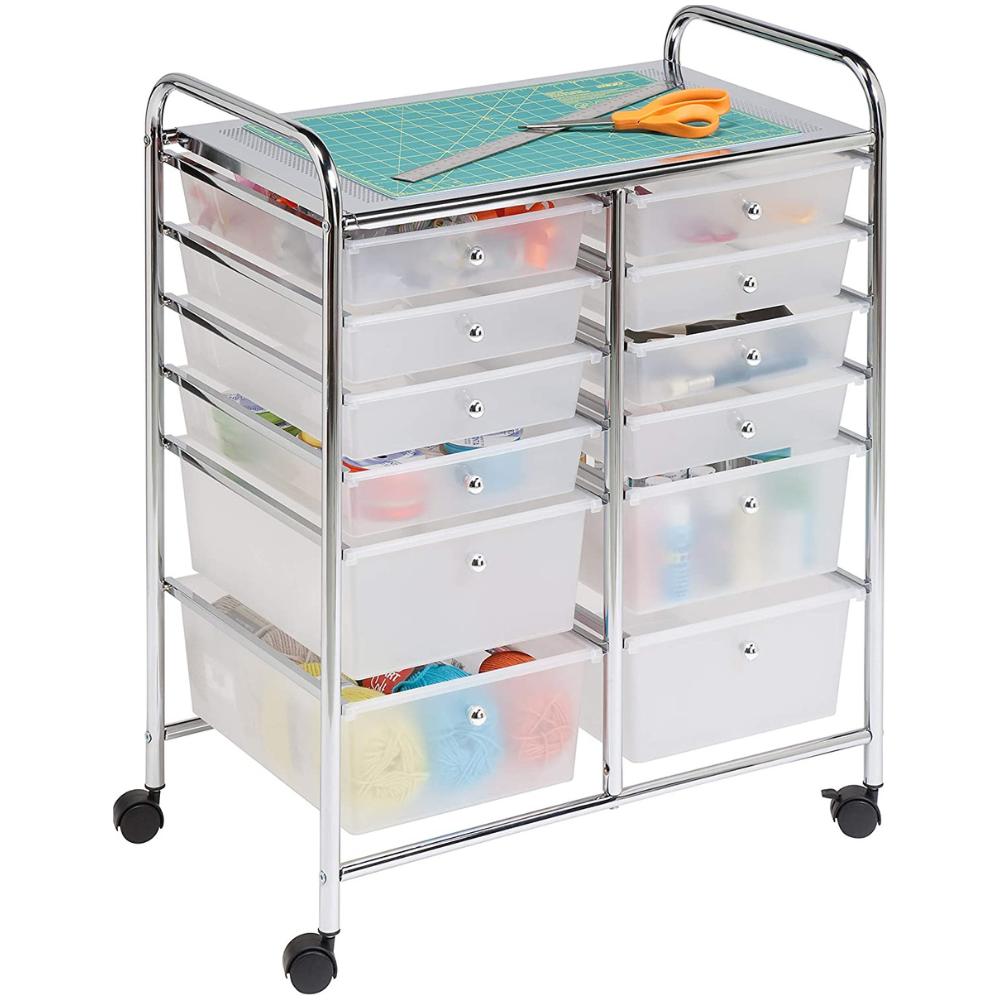
Twelve drawers means a drawer can belong to one thing. Batteries here, tape there, glue in the third. Once that is true, two useful things happen: putting something away requires no decision, and finding it requires no search.
That is the whole argument for a multi-drawer organiser, and it is why the drawer count matters more than the total volume.
See-through fronts change the habit
Opaque drawers put you back where you started, because twelve identical fronts are as unhelpful as one big drawer.
The usual answer is labelling, and the usual outcome is that nobody labels the last four, then the categories drift, and the labels become wrong, which is worse than no label.
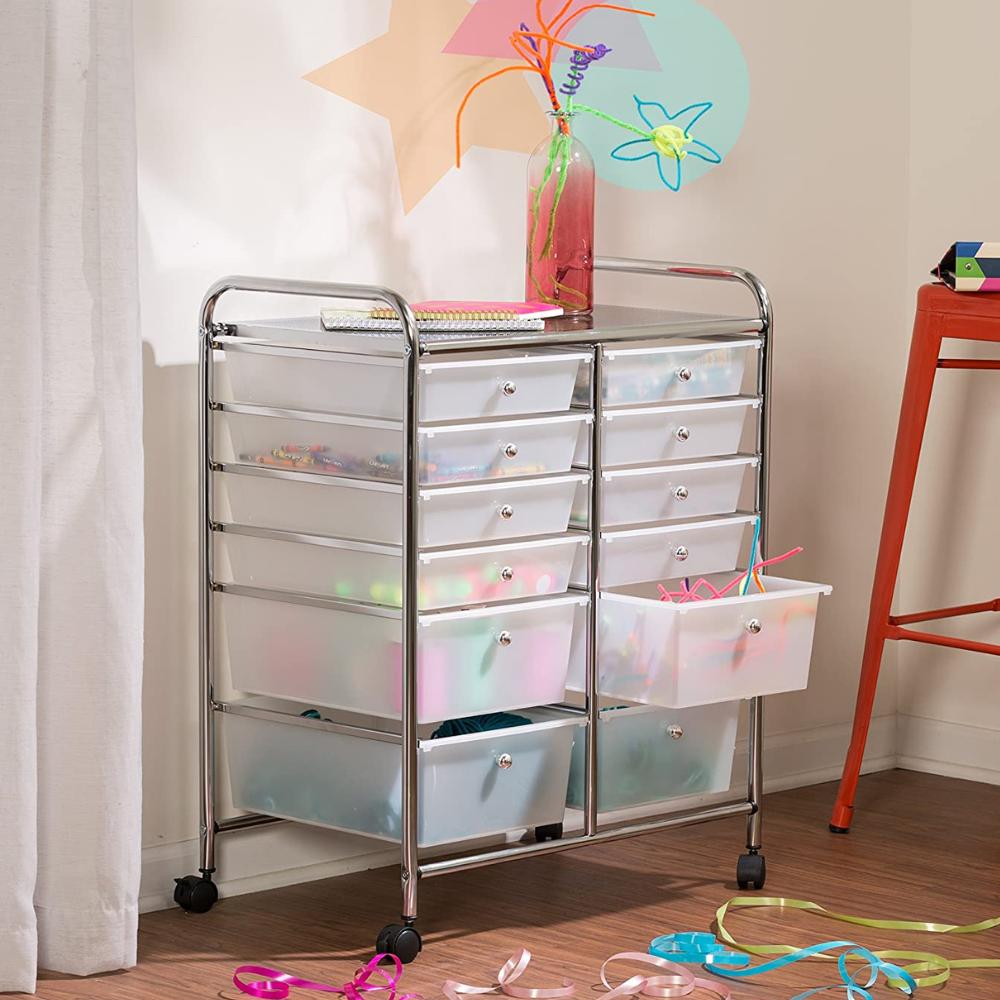
Semi-transparent fronts sidestep it. You can see roughly what is in each drawer, so the system survives being used carelessly. That matters most in a shared space like a classroom or a family craft table, where the person putting things away is not always the person who set it up.
Double wide, not tall
Twelve drawers can be a tower of twelve or two columns of six, and the two behave very differently.
A tower puts the bottom drawer at ankle height and the top one near your face. The bottom two stop getting used.
Double wide keeps everything between knee and waist height, all visible at once, and it is considerably harder to tip when someone pulls a drawer out sharply. If you have children using it, that stability is worth more than the floor space it costs.
What it is not for
At 3.9 kg with plastic drawers on a light frame, this is an organiser rather than a tool chest.
Small hand tools, consumables and craft materials are exactly right. A drawer full of sockets, a bench vice or tins of paint are not, and loading it that way ends in a bowed drawer that will not slide.
If the contents are dense and heavy, shelving is the right answer instead.