
The complete guide
Where a trolley beats a shelf
Two different jobs
A shelf and a trolley look like they do the same thing, and they do not.
A shelf is where something lives when you are not using it. It is chosen for capacity and it stays put.
A trolley is where things live while you are using them. It is chosen for how easily it comes to you, and capacity is secondary. That is why a cart with three modest tiers can be more useful than a bookcase with five big ones, if the work moves around.
Craft, hobbies, hairdressing, a home office that migrates to the kitchen table, a bathroom with no storage: all of those are trolley problems rather than shelf problems.
Why baskets and not flat tiers
The most common frustration with a cheap tiered cart is that things fall off it.
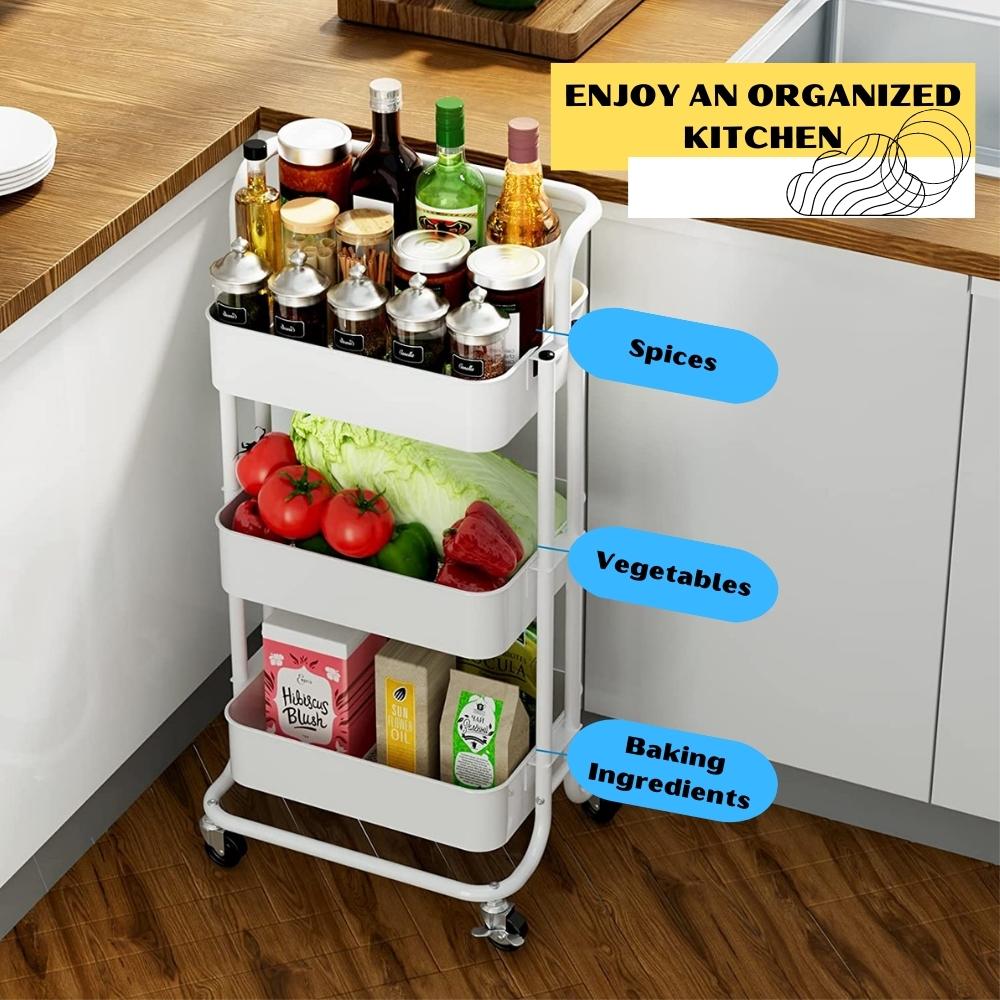
Almost everything people put on a trolley is round: bottles, tins, jars, reels of thread, pens, spray cans. A flat tier with a small lip does not hold them once the cart moves.
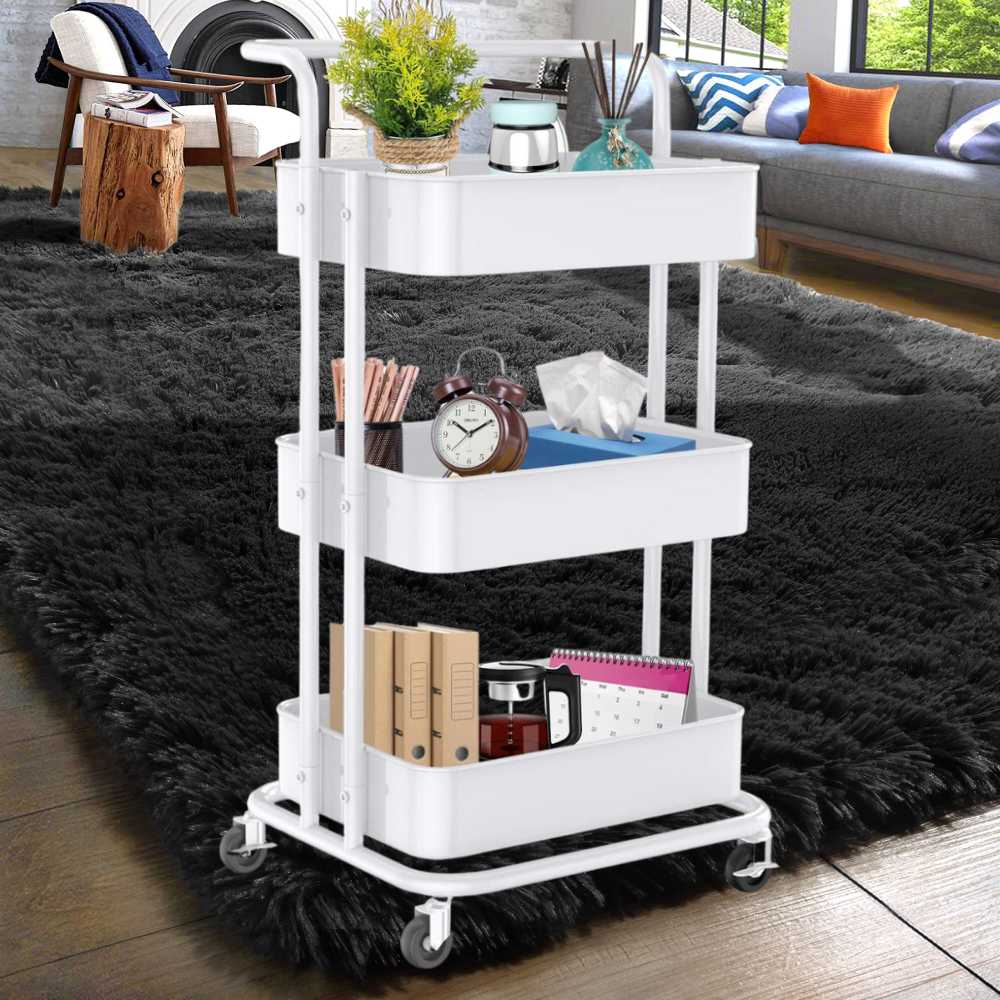
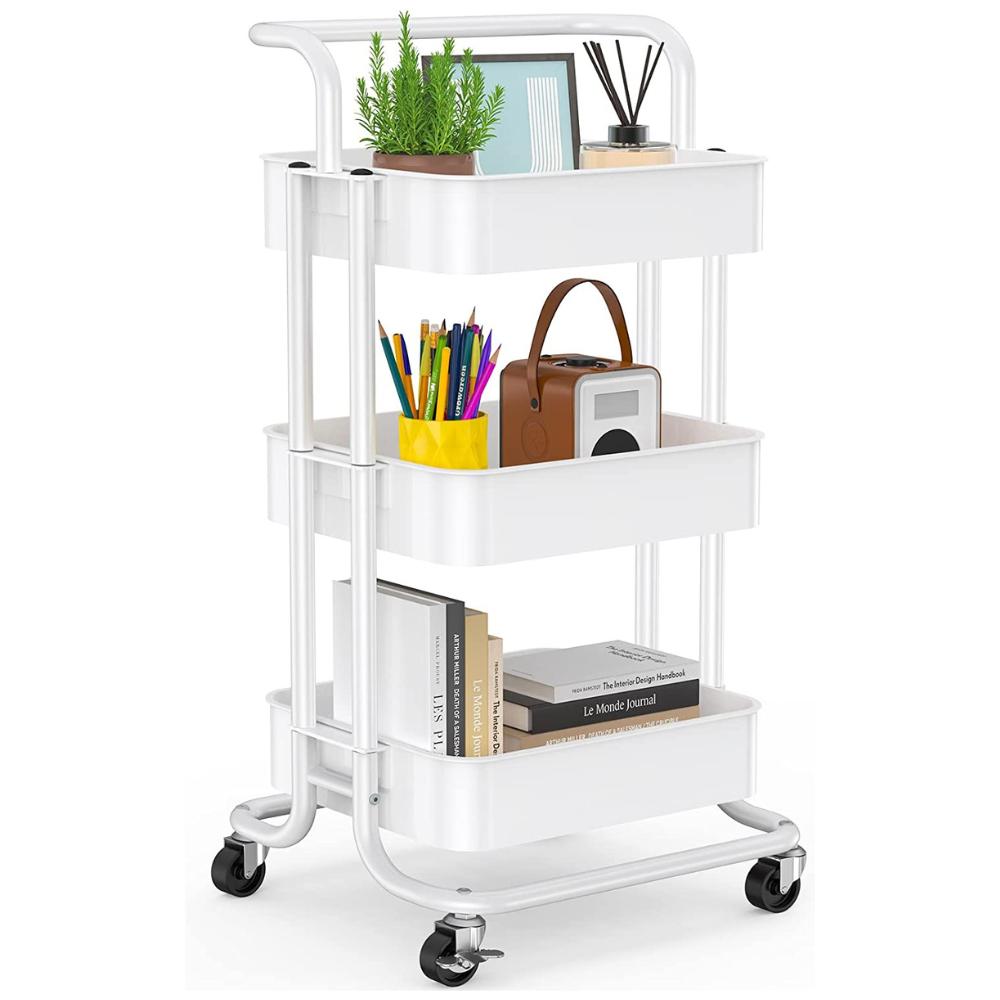
Deep baskets do. The sides are high enough that the contents shift rather than escape, which is the difference between a cart you push confidently and one you edge along.
Two locking wheels, not four
This looks like a cost saving and it is actually the better design.
Four locking castors means finding and flicking four levers every time you stop, which nobody keeps doing after the first week.
Four free castors means the cart moves when you lean on it, which is a nuisance beside a chair and a hazard beside a bed.
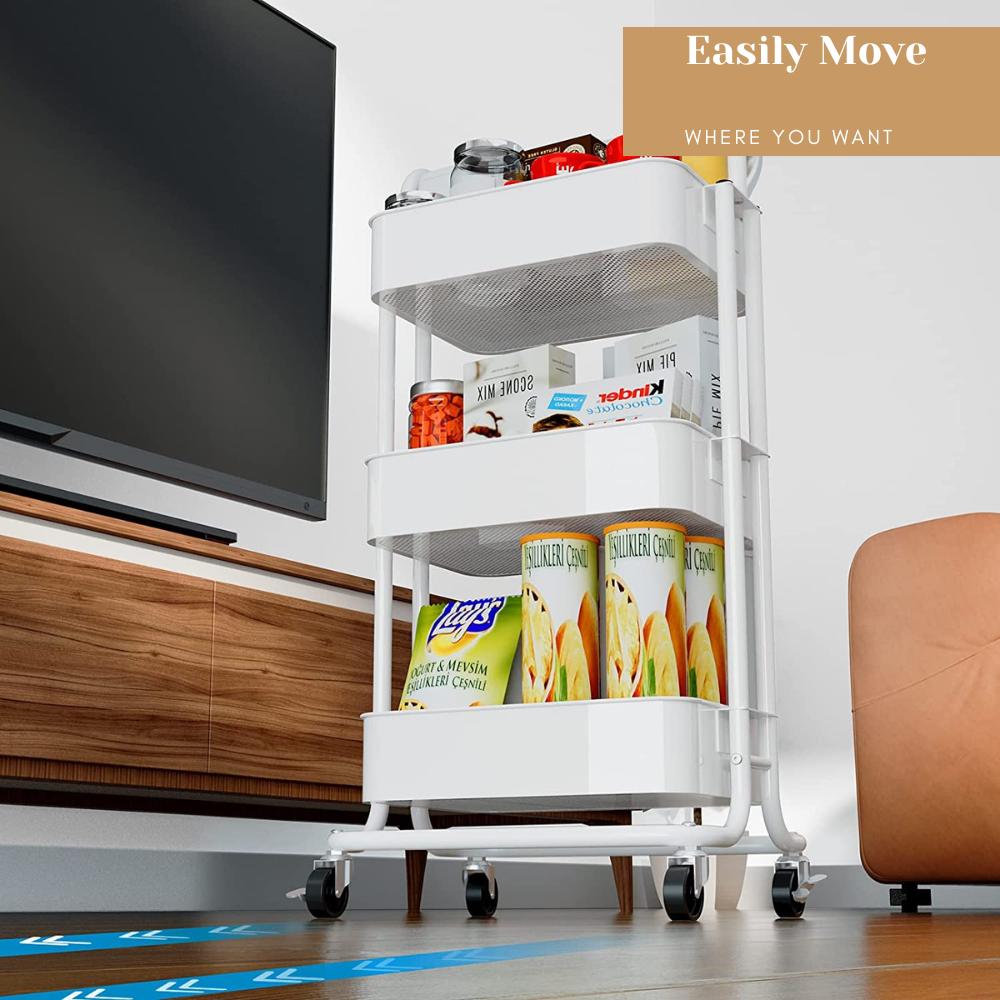
Two locks give you a cart that rolls freely and then holds still with one movement of your foot. Put the locked pair at the end you reach across.
Handle on, handle off
The removable handle is worth a moment's thought before you assemble it, because it changes the shape of the cart.
With the handle, it is a trolley. You push it, it steers, and it suits anywhere it makes a journey: room to room, kitchen to garden, storeroom to classroom.
Without the handle, it loses that width and becomes a slim three tier rack. That is the version that fits the 20 cm gap between a washing machine and a worktop, or beside a bed as a nightstand you can pull out.
Most people find one of those two uses is clearly theirs. Decide which before you build it and you will not take it apart again.
Loading it so it stays upright
Ten kilos a shelf is a decent rating for a light cart, and the practical limit is usually stability rather than strength.
Heavy things go in the bottom basket. That is not a rule about the shelf breaking, it is about the cart tipping when a wheel catches a threshold strip.
The top basket is for what you reach for most, and for the light things. A full bottle of anything is happier one tier down.