



The complete guide
Loading shelving so it stays safe
What the load rating actually promises
Shelving is sold on a number, and the number is only true under a condition that rarely gets read: evenly distributed.
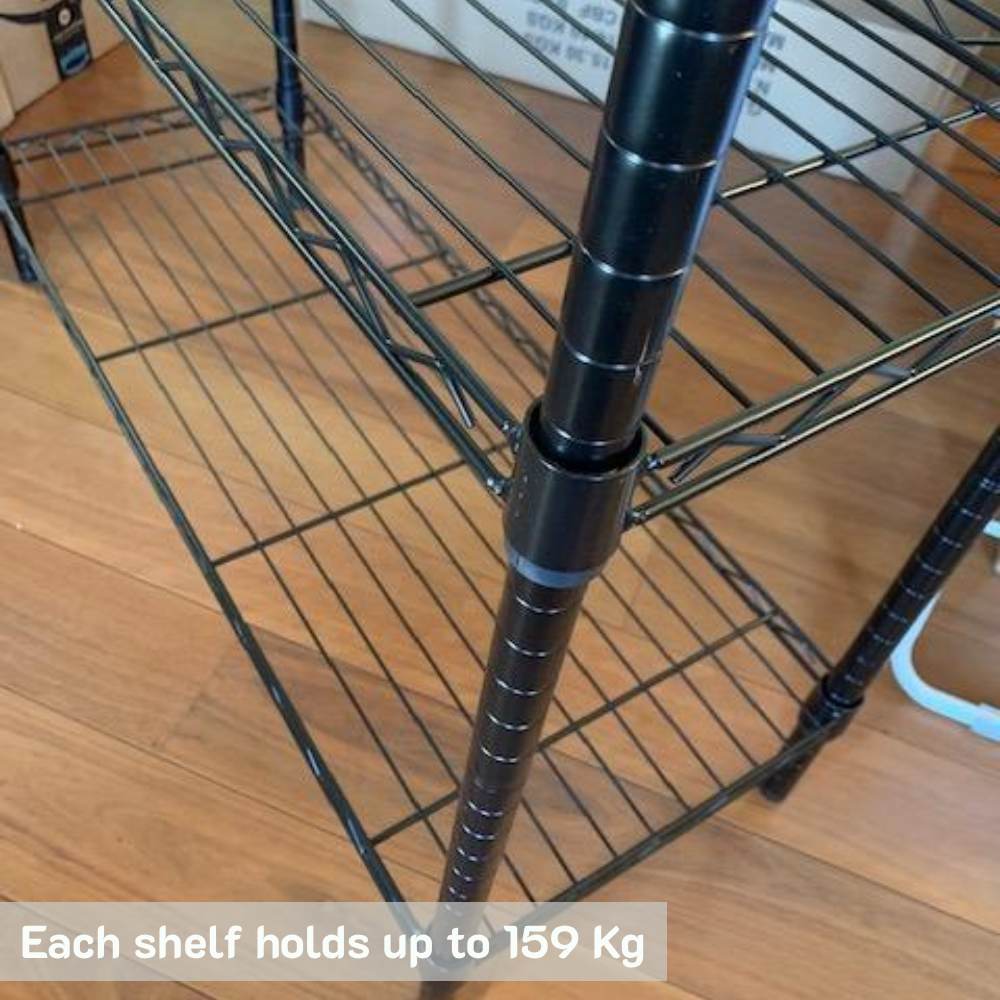
159 kg per shelf means 159 kg spread across the shelf. It does not mean 159 kg standing in the middle, and it certainly does not mean it in one corner. A concentrated load bends the shelf at that point and puts all the strain into two of the four posts.
In practice this is easy to work with. Spread heavy boxes along the shelf rather than stacking them in one spot, and keep the single heaviest object low and central.
Heavy low, light high
This is the whole of shelving safety in three words, and it matters more on a freestanding unit than a wall-fixed one.
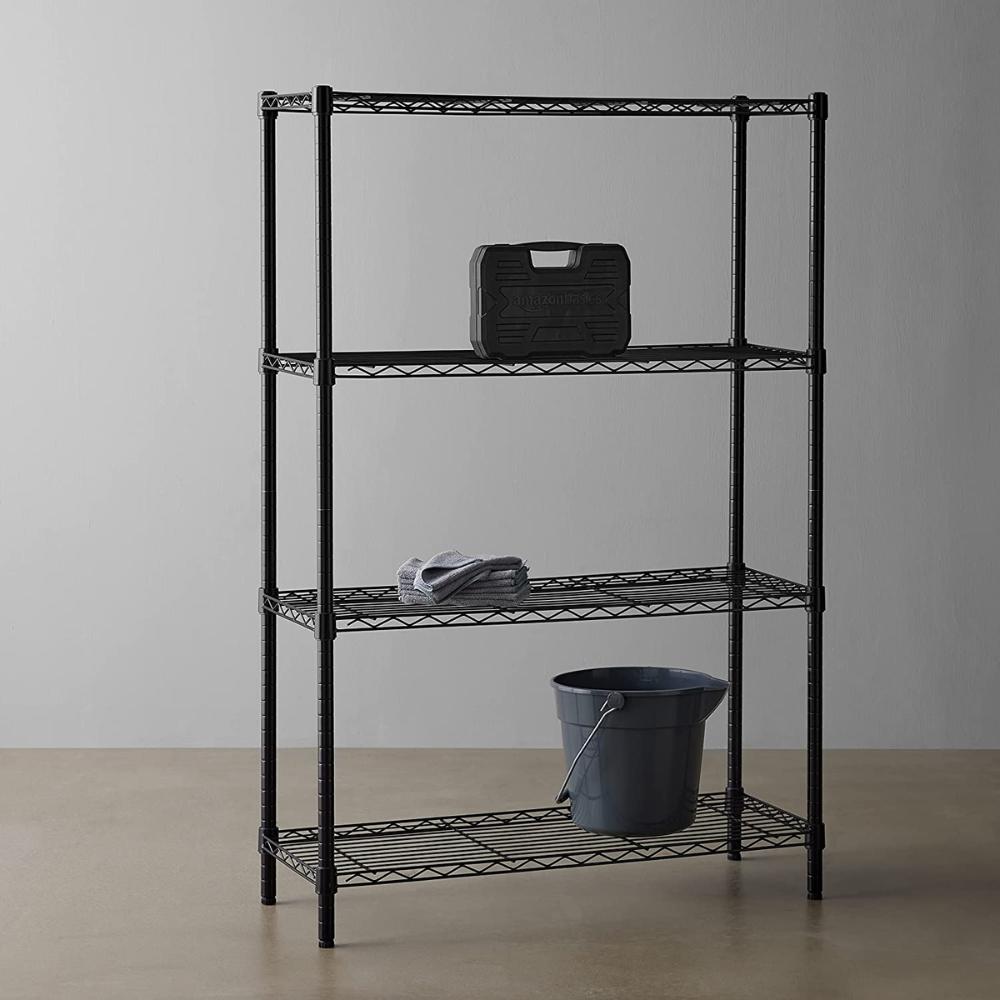
A tall unit with the weight at the top has a high centre of gravity, and garage floors slope. Put paint, tools, batteries and tiles on the bottom two shelves. Put the light bulky things, the camping gear and the empty crates, up top.
The other half of it: never climb on it. Wire shelving is not a ladder, and the load rating has nothing to say about a person standing on one edge.
Levelling is not optional in a garage
Almost every garage floor slopes towards the door, because it is built to drain.
Standing a 137 cm unit on that slope without levelling it means every shelf is slightly tilted and the frame is carrying its load at an angle. Round objects roll to the front, and the whole thing feels less solid than it is.
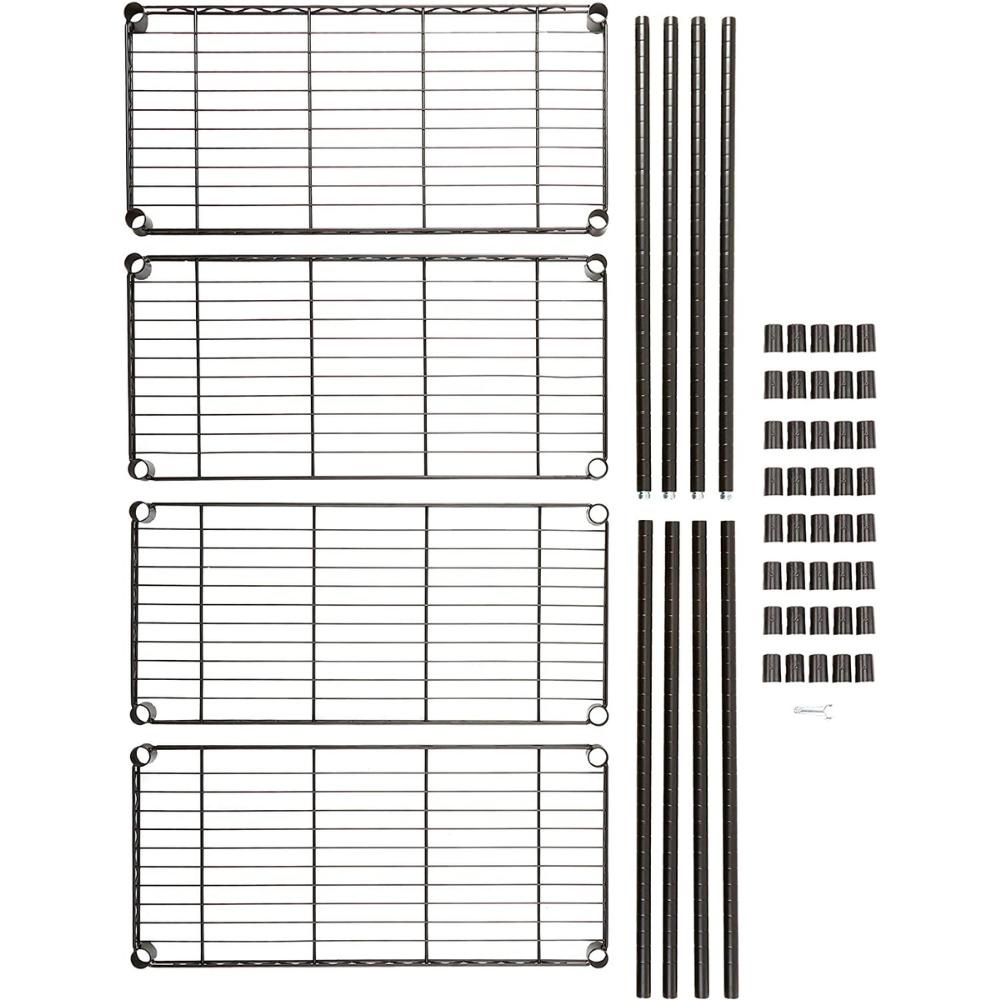
The adjustable foot caps take a couple of minutes. Stand the unit empty, check it with a spirit level or just look at a shelf against the wall line, and wind the feet until it sits square. Do it before loading, not after.
Setting the shelf heights once, properly
The 2.5 cm adjustment is the most useful feature on the unit and the one most people set once and never revisit.
Before you build it, look at what is actually going on it. Most garage storage is boxes of two or three standard heights, plus a few tall things: a strimmer, a stack of paint tins, a bag of compost.
Set three shelves to your common box height and leave one tall gap. You will fit noticeably more than with four evenly spaced shelves, because evenly spaced means air above every box.
Wire, damp and cold
An unheated garage swings between cold nights and warmer days, and that means condensation.
Solid shelving traps it. Water forms under whatever is sitting on the shelf and stays there, which is how cardboard boxes go soft at the base and steel tools develop rust spots on one side only.
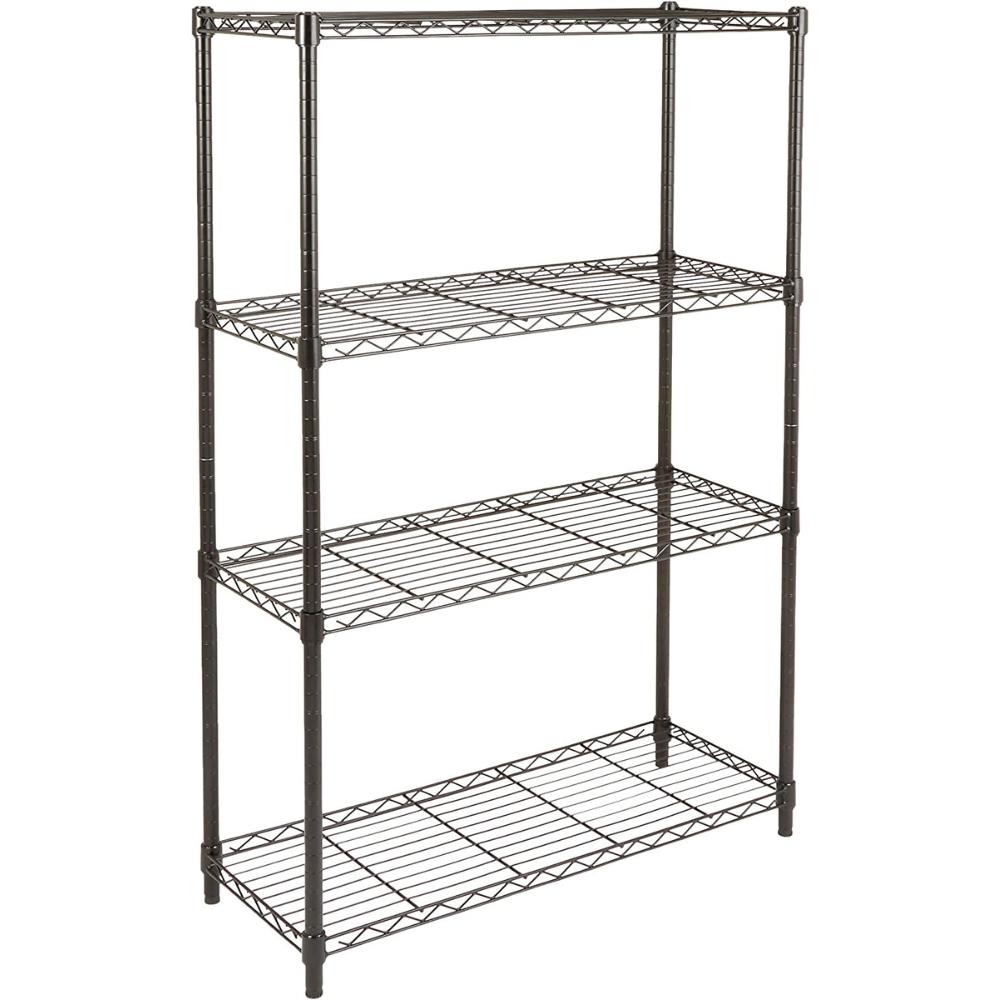
Wire lets air move underneath. It does not stop condensation forming, but it stops it sitting. That, plus keeping the unit off a floor that gets wet, is most of what keeps garage storage in good condition over years.